

Are you searching for reliable ways to access and understand legal cases in Brazil? Whether you’re a business professional, attorney, or individual navigating the Brazilian legal system, knowing how to search and obtain copies of legal cases can save time, reduce uncertainty, and provide essential insights. At Info Finder Brazil, we offer streamlined services to help you explore legal matters efficiently while adhering to Brazilian regulations and practices.
Understanding the Brazilian Legal System
The Brazilian legal framework is based on civil law principles, relying on statutes and codified laws as the primary foundation for legal decisions. Unlike common law systems, where precedents hold significant weight, Brazilian legal research emphasizes specific codes, acts, and regulations.
Our specialized team provides seamless support to help you navigate this unique system. From case analysis to procedural insights, we equip you with critical information for making informed decisions about lawsuits or administrative proceedings.
Public Access to Legal Cases in Brazil
In Brazil, most legal case information is publicly accessible, reflecting the principles of transparency and accountability in the justice system. Accessing these cases typically requires specific details, such as the CNJ Process Number, the names of involved parties, or tax IDs. These details can be used to retrieve case information through official court portals.
Exceptions: Confidential Lawsuits
Certain legal cases, however, are fully or partially classified as confidential or under seal by law or by judicial decision. In these situations, access to case details is restricted, and public viewing is not allowed. Examples include:
- Legal Cases involving minors: The brazilian law protect the rights and privacy of children and adolescents in a lawsuit.
- Civil status changes: The brazilian law also impose conidenciality to matters like adoption, divorce, or name changes.
- Sensitive judicial decisions: Cases classified as confidential to safeguard privacy or sensitive data.
Access to confidential cases is strictly limited to authorized parties, such as the litigants, their legal representatives, or individuals with judicial authorization.
What Is the CNJ Process Number?
The CNJ Process Number is a unique identifier assigned to every legal case in Brazil, established by the National Justice Council (CNJ – Conselho Nacional de Justiça). This number contains essential case information, including the year of filing, jurisdiction, and court responsible for the case.
- Year the case was filed
- Jurisdiction and court responsible for the case
- Specific procedural codes
The CNJ number follows this format NNNNNNN-DD.AAAA.J.TR.OOOO, where:
- NNNNNNN = Sequential number of the case
- DD = Verification digits
- AAAA = Year of filing
- J = Jurisdiction code
- TR = Court code
- OOOO = Originating unit code (court division or branch)
Having this number is the fastest and most reliable way to locate a case in the Brazilian court system. You can use it on official court websites to access case details instantly.
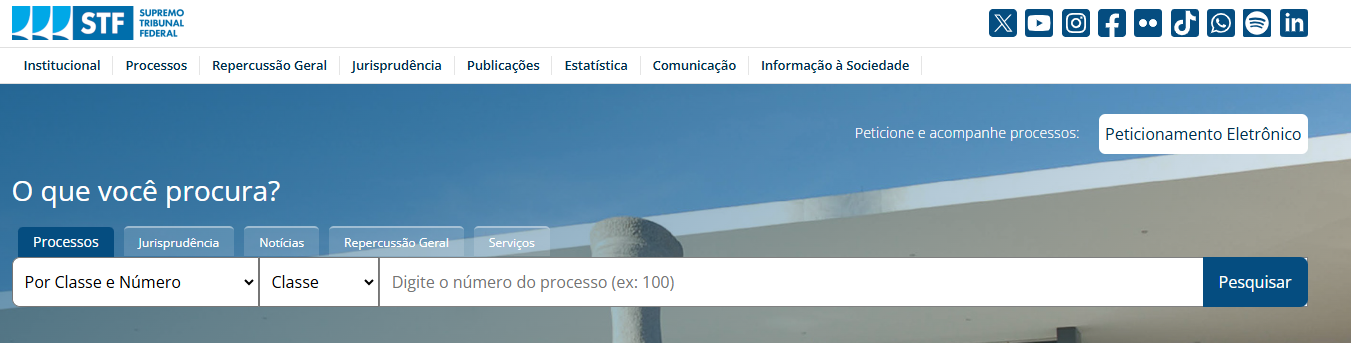
Which Court Handles Your Case? Understanding Jurisdictions in Brazil
The Brazilian legal system is divided into specialized courts, each handling specific types of cases. Understanding the correct jurisdiction is vital for accessing the right legal information. Below is a summary of the main courts and their areas of responsibility:
- Labor Court
-
- Handles: Employment disputes, wrongful termination, unpaid wages, workplace rights violations, and other labor-related issues.
- Jurisdiction: Regional labor courts (Tribunais Regionais do Trabalho – TRT) and the Superior Labor Court (Tribunal Superior do Trabalho – TST).
- Civil Court (State and Federal Courts)
-
- Handles: Civil disputes, family law cases (divorce, custody), property issues, contracts, and other private law matters.
- Jurisdiction: State courts (Justiça Estadual) for most civil cases, or federal courts (Justiça Federal) for cases involving federal entities or matters.
- Criminal Court (State and Federal Courts)
-
- Handles: Criminal offenses, including theft, assault, drug-related crimes, and other violations of criminal law.
- Jurisdiction: Criminal divisions of State or federal courts, depending on the nature of the offense.
- Electoral Court
-
- Handles: Cases related to elections, political campaigns, and voter registration issues.
- Jurisdiction: Regional Electoral Courts (Tribunais Regionais Eleitorais – TRE) and the Superior Electoral Court (Tribunal Superior Eleitoral – TSE).
- Military Court
-
- Handles: Cases involving military personnel and crimes committed under military law.
- Jurisdiction: Military justice systems for both state and federal levels.
- Tax and Administrative Courts
-
- Handles: Disputes regarding taxes, administrative fines, and other public administrative issues.
- Jurisdiction: Specialized tax courts or administrative tribunals.
- Small Claims Court (Juizados Especiais)
-
- Handles: Minor civil and criminal cases with simplified procedures, such as consumer disputes or minor damages claims.
- Jurisdiction: Small claims divisions within state courts.
Simplifying Legal Research in Brazil
Searching and obtaining copies of legal cases in Brazil can seem complex, especially for those unfamiliar with the country’s legal framework. Whether you need assistance with public records or require insights into specific legal cases, Info Finder Brazil is here to guide you every step of the way. We provide reliable support to help you access the information you need quickly and confidently.
Contact us today to learn about our fees for assisting you in obtaining copies of legal cases in Brazil (notarized or not), with ease and precision.